
Staffing a remote lodge or island resort: an operator's guide
Wild Ops is the specialist recruitment partner for remote and regional hospitality in Australia — run by two people who spent over fifteen years running remote properties themselves, including a lodge you could only reach by boat. Staffing a place at the end of a boat trip or a dirt road is a different problem from staffing a venue in town. Here’s how we approach it: where the people actually come from, what the distance changes, and what the posting has to carry.
Every remote property runs on people who agreed to be a long way from everywhere. That is the staffing problem in a sentence: the role is hard to fill because the place is remote, and a hire who doesn’t work out is expensive to undo for exactly the same reason. On an island reached by boat, or a lodge at the end of a long dirt road, you can’t drive someone in for a trial shift on Tuesday or quietly move them on when it isn’t working — the arrival and the exit are both a scheduled crossing, and both cost money.
Most operators reading this are either staffing a property for the season ahead or filling a role that keeps coming loose — the last person left early, or the good applications never came. If that’s the week you’re in, it’s worth a conversation before you widen the net any further: tell us the property and the role, and we’ll give you an honest read on what’s realistic — including whether the role is set up to be filled at all, and whether the right person for it is even out there this season. Not a promise we can produce the right person overnight.
We’ve written about what actually predicts whether a remote hire lasts the season and where the remote hospitality workforce goes when the season ends. This piece sits above both: the operator’s overview of staffing a remote or island property, and where to go next for the specific hires.
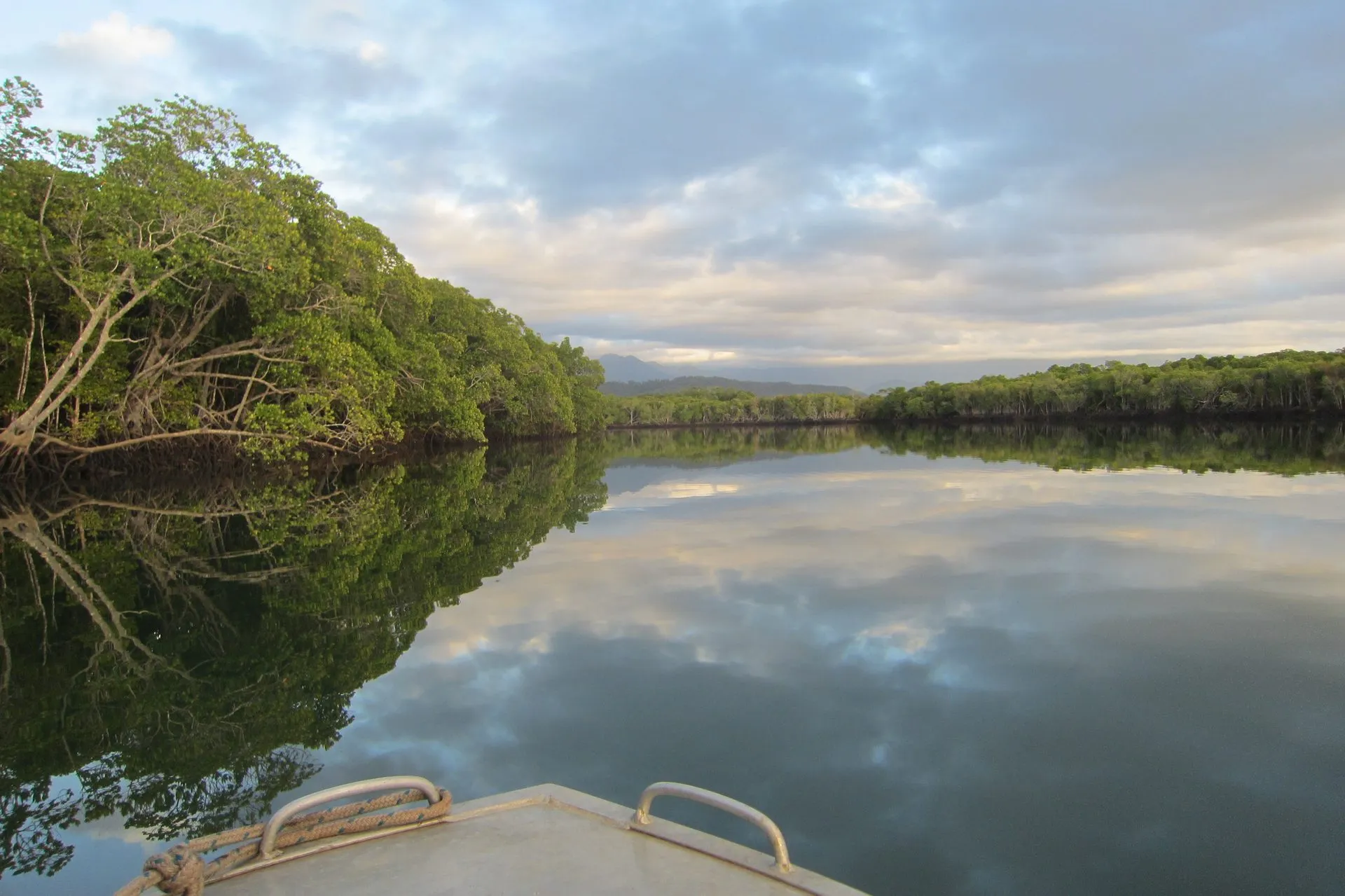
The distance cuts both ways
The distance changes the maths of a hire before you’ve written the ad. The industry surveys put the cost of replacing one departed worker between $3,000 and $7,000 — and that’s a city figure, counting the advertising and training, not the seat on the barge or the light plane to fly one person out and the next one in. Out here, the wrong hire isn’t a quiet reshuffle. It’s a crossing each way, a covered roster in between, and a room turned around before the next arrival. And a remote crew is small enough that the roles lean on each other — the kitchen hand who also unloads the weekly delivery, the guide who covers the front desk on changeover day. One departure usually opens more than one hole.
So a remote property is really solving a retention problem wearing a recruitment problem’s clothes. The people who cost you most aren’t the ones you can’t find — they’re the ones you find, fly in, house, train, and then lose at week six, when the reality of the place and the job they pictured turn out to be different things. Most people who leave a remote posting leave early, in the first weeks or at the end of the first season. So the real target was never a body by the deadline. It’s the person still there when the season closes — and that changes both who you look for and where.
Where remote staff actually come from
The most common way to staff a remote role is to post it on the big job boards and wait. In our experience it’s also the way that underperforms out here, and it’s worth being clear about why. A job board is built to maximise applications — it does that job well — and for a remote property that’s the wrong target. A metro venue can hire from a wide field and carry the odd loss — the field is deep and the exit is cheap. You can’t. You need the few people who’ll still be there in March, not the many who’ll apply by Friday.
The people who last in remote work are usually the ones who’ve already chosen it once. Someone who has done a season at the end of a road, or on a place you reach by boat, and came back for another — they know what a day off is when town is three hours away, and they’ve decided they’re fine with it. That field is smaller and quieter than the job boards, and in our experience a lot of it moves by word of mouth: remote hospitality is a small world, and the strongest applications we see often arrive because someone who has done the job vouched for someone who can.
The other rich seam is the counter-season. Australia’s remote year runs in two halves — a northern dry season from about May to October, and a southern summer from about October to May — and experienced people move between them. The practical version is a timing rule you can act on without knowing a soul: to fill a southern-summer role, look to people finishing the northern dry around August and September; to fill a northern-dry role opening in May, look to people wrapping up a southern summer around February and March. Either way you’re reaching someone proven this year and free in the weeks your role begins, rather than whoever happens to be looking the week you post. It’s why, in our experience, remote hiring runs on the season’s clock, not the vacancy’s — the operator who starts six months out is choosing from a far longer list than the one who starts eight weeks out, and the cheapest hire a seasonal property makes is the return offer with a date on it, made before this season’s crew scatters.
The ad still matters — it just does different work. A broad ad maximises applications; a specific, honest one filters for fit. Name the real duties, the real living conditions and the real shape of the season, and you’ll get fewer replies and better ones — and the people it puts off are mostly the ones who wouldn’t have lasted anyway.
The place does the screening
On a remote property the living isn’t a detail around the job — it’s most of the job. The manager fixes what breaks, because the tradesperson is a boat ride away. Everyone lives where they work, eats at the same table on their day off, and has no front door to close at midnight. A person can be excellent at the work and still be an unknown for that life.
So the screen that matters is less about the trade than the living — the most remote place someone has actually lived and what their days off looked like there, how the worst week of their last season ran, how each of their recent roles ended. The evidence behind those questions is in the retention piece; the short version is that people rarely come undone on the work, and often on everything around it. For the specific hires, we’ve written separately on recruiting a remote chef and hiring a management couple — the two placements where the living carries the most weight — and, for the wider how and when, on the retention piece above and where the workforce moves between seasons.
The package is the property
On a remote property the package isn’t a salary and a few perks — it’s the working conditions: the room, the food, the transport and the days off are the life the person is signing up to. The salary matters, and it’s negotiated role by role; we won’t pretend there’s a standard number. But a live-in worker weighs the whole posting: the room, theirs alone or shared, and how far from the job; whether the days off actually happen, and what a day off is when the nearest town is a crossing away; how the ordering works when the delivery comes by barge or road train once a fortnight; and the edges — the finish date, the reference, whether there’s a return conversation.
The strongest thing an operator can do about it costs nothing: the honest preview, told before the acceptance. Last month’s roster as it actually ran. A photo of the real room, not the guest suite. What the wet season does to the road out. The honest version doesn’t work by scaring the wrong people off — it works because the first hard week confirms what they were told instead of breaking a promise. On a property people can’t easily leave mid-season, that’s worth more than any perk you could bolt on.
What we screen for
What we screen for is the living, weighted as heavily as the trade — and we screen it because we’ve lived it. One of us came up as a chef, the other as a carpenter, and together we spent over fifteen years running remote properties: a luxury lodge on the Great Ocean Road, a wine-country motel on WA’s south coast, a wilderness lodge on the Top End floodplains, an island lodge in NSW reached only by boat. We’ve staffed kitchens and front desks at the end of a crossing, covered the weeks when a hire missed, and watched the difference between someone who could do the work and someone who could live there decide a whole season.
That’s what Wild Ops is set up to do. We’re the specialist recruitment partner for remote and regional hospitality, and the hardest, most remote properties are the ones we understand best. When we put someone forward for a lodge, station or island kitchen, the trade is the entry requirement, not the whole assessment — we screen the living with the same weight, because that’s what decides whether you’re hiring again next season.
An operator reading this already knows which parts of the posting they can answer honestly — the true state of the roster, and the room as it really is. A candidate reading it recognises the screen and can hold their own history against it. When both sides hold, the hire has every chance of lasting — and most of that is settled before anyone gets on the boat.
Staffing a remote lodge, station or island property? Tell us about the place and the role — talk to us at wildops.com.au/hire-talent. This is the work we do.
After remote or regional work yourself — see current roles and register your interest.